
Planning Campaigns
How to plan your campaign calendar with Quotient
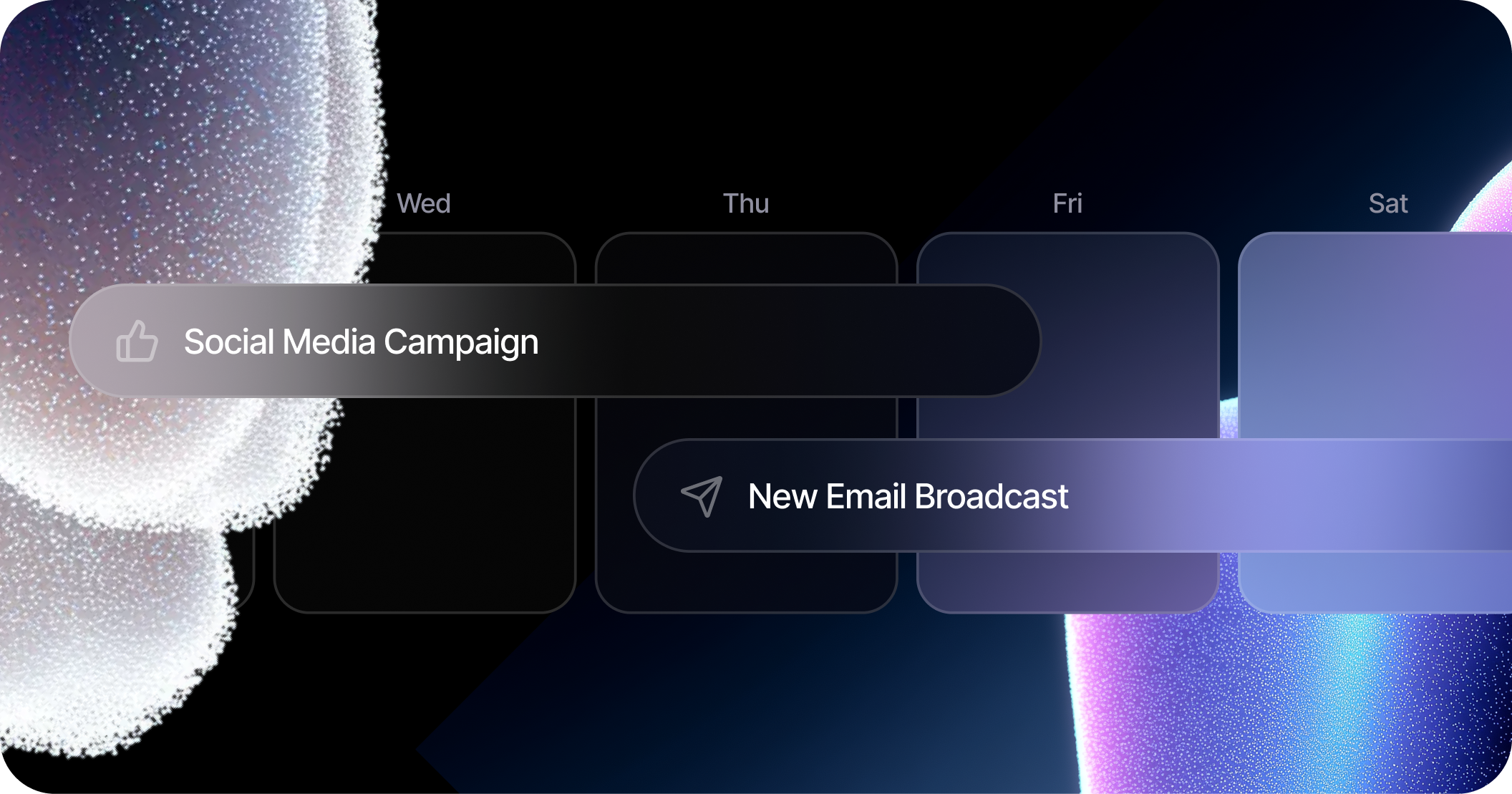
Campaigns help you organize your marketing efforts around a central theme or goal. A campaign in Quotient is a coordinated collection of tasks and deliverables that work together toward a common objective. Think of campaigns as the strategic umbrella that organizes your marketing work across different channels and timeframes.
Grouping deliverables into campaigns is not a requirement in Quotient; you can still publish one-off blog posts or email broadcasts. But grouping things into campaigns helps ensure that your marketing has a consistent message, making it more effective.
Here are some examples of campaigns:
-
New Feature Announcement: When announcing an important new feature or launching a new product, it's common to write blogs, send email broadcasts, or host webinars promoting the new feature.
-
Events: Campaigns are often built around marketing events. For example, if you are hosting a webinar, or if your company is attending an industry conference, you might want to do a lot of marketing around that event, e.g. sending emails to customers before and after the event.
-
Thought Leadership: A specific topic, such as a new regulation or technological breakthrough, might be trending in your industry. To capitalize on interest, you might want to publish a series of blogs explaining your company's perspective on it.
Core Concepts
Tasks
Campaigns are organized as a series of tasks. Each task represents a specific piece of work that needs to be completed as part of the campaign. Tasks move through a workflow with four statuses:
- To-do - Task has been created but work hasn't started yet
- In progress - Task is actively being worked on
- In review - Task is complete and awaiting review or approval
- Done - Task is complete and approved
Tasks can represent many different types of work:
Deliverable-Linked Tasks - Work that's connected to creating specific marketing assets in Quotient:
- Writing a blog post
- Designing an email broadcast
- Setting up a marketing event
- Building an automated flow
- Creating a social media post
Standalone Tasks - Work that doesn't happen directly in Quotient:
- Shooting a video
- Taking screenshots of a new feature
- Getting legal approval
- Running paid ads
- Coordinating with external vendors
Deliverables
When a task involves creating a marketing asset that will be distributed to your audience, it can be linked to a deliverable. Deliverables are the actual marketing assets created in Quotient:
- Blog Posts - Articles published on your website
- Email Broadcasts - Emails sent to your audience
- Marketing Events - Webinars, conferences, or in-person events
- Flows - Automated email sequences
- Social Posts - Content for X, LinkedIn, Instagram, Facebook, and TikTok
When you link a task to a deliverable (like "Write Q4 product announcement blog"), the task provides project management structure while the deliverable contains the actual content and publishing details.
Briefs
Briefs are strategic memos that explain the purpose, message, and audience for a campaign. This information is critical for aligning both humans and Quotient on the strategy of a campaign. Quotient reads the brief for a campaign when creating content to ensure that the content is consistent with the theme and message of the campaign.
Task Owners
Each task can have an owner - the human who's responsible for completing it. When you're the owner of a task, you'll get notifications about its progress as Quotient works on it, and you can track it on your personal task list.
Planning Campaigns with Quotient
Ask Quotient to help you develop campaigns from inception to execution. It can create the campaign, write the initial brief, break down the work into tasks, and pick the right timeframe. Once you've agreed on the concept, Quotient will work through each task, creating the deliverables (like blogs, emails, or social posts) in new threads.
Here are some tips for getting the most out of Quotient when planning campaigns:
-
You can ask Quotient to help you come up with ideas for campaigns, or if you already have a clear idea for a campaign you can ask it to break it down into actionable tasks.
-
Ask Quotient to search the web and perform research, which is helpful for campaigns that have to do with current events or trending topics.
-
Every company runs campaigns differently. Some prefer many small campaigns with just a few tasks and deliverables, while others prefer large campaigns with dozens of tasks and deliverables over several months. Tell Quotient about your preferred workflow and ask it to "remember" it in the future.
-
If you're not happy with a campaign, tell Quotient what you'd like to change. It will update briefs and add or remove tasks until it looks right. Building campaigns is an iterative process and requires some back and forth.